Reaching 20k€ MRR & raising 700k€
For broader context, this post is Chapter III of the Why Cyrius Failed series.
Recap of the previous parts: We launched our cybersecurity startup while still at school, using no-code tools, and transitioned from a school project to a full-time venture (Chapter I).
With our first clients on board, we brought on interns, secured our first major contract (+100k€), and hired a CTO (Chapter II).
But product bugs started to be a challenging issue…
Table of contents
- The first full-time employee
- Gaining traction & visibility
- Our first salary
- The funding roadshow hell
- An updated vision
Lessons learned
- #15 - Regularly audit and refactor your processes.
- #16 - A small team is better than the wrong team.
- #17 - Don't fool yourself by the circus you run.
- #18 - Raising funds is not a mandatory step.
- #19 - Be strategic and patient when raising funds.
- "Ok, I will commit for 50k€".
I hid a scream of satisfaction. I immediately called this influent Business Angel's friend:
- "I just got a commit from him. What do you say?"
- "If he is down, so am I. Count me in for 50k€ as well."
Here I was at 25, collecting checks worth an expensive car from well-known investors.
But before that moment happened, we still had a long way to go.
At that time, we just had found our CTO.
We were able to fix our product issues.
Or so we hoped.
We were at a point where clients would get really angry at us with the bugs - rightfully.
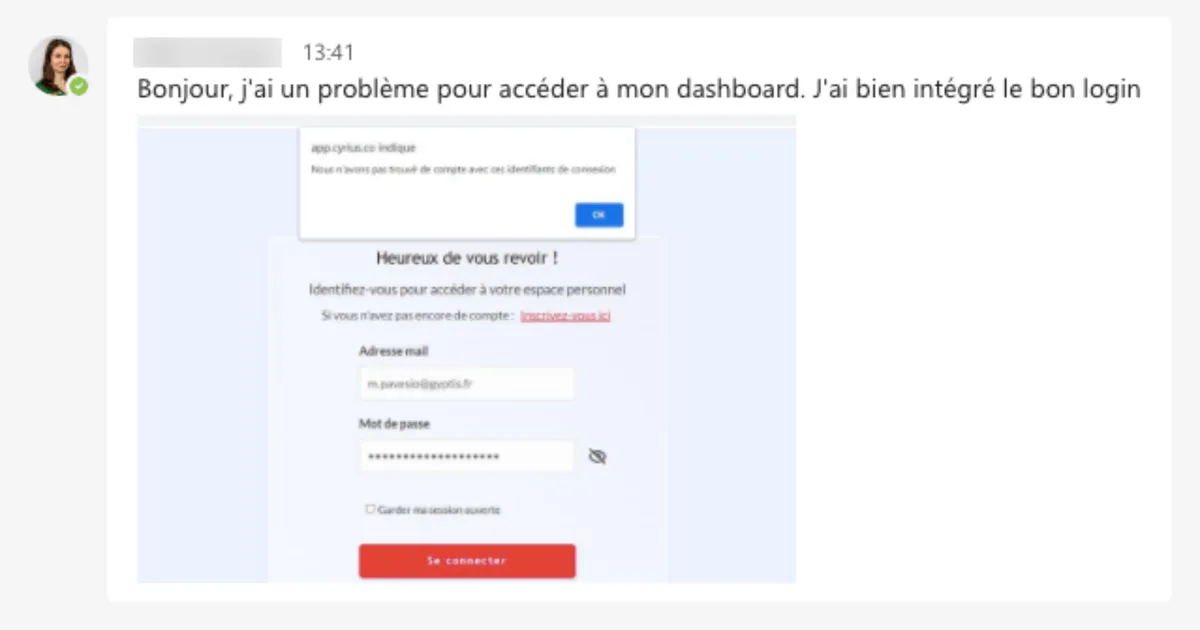 Year 1.5 - "Hi, I have trouble accessing my dashboard. My login credentials are good." I deleted angrier messages since then but this one is really soft 😅
The first task for our newfound co-worker was to improve the platform's loading speed, which took half a minute. He developed an API in a few hours and cut that time by 10.
We were stunned. We could finally get our clients happy!
As you can guess, that did not happen.
Instead of pausing access to the platform, we chose to stick with no code and gradually upgrade our architecture with code. We created a Frankenstein product with patches everywhere, and soon, more bugs started popping up.
Looking back, we should have taken the time to refactor our processes and build a more robust architecture. Instead, we feared our clients' reaction and went for the quick fixes.
LESSON #15: Regularly audit and refactor your processes.
When pivotal moments occur, take the time needed to refactor your product, even if it is resource-intensive. Quick fixes can lead to long-term issues; take time to implement sustainable solutions. The hardest part is to determine whether it is the right time or not to invest that time.
The first full-time employee
Around the same time, we recruited our first full-time employee (FTE), a developer from the same firm our CTO had left. We had some cash and wanted to double down on our tech development.
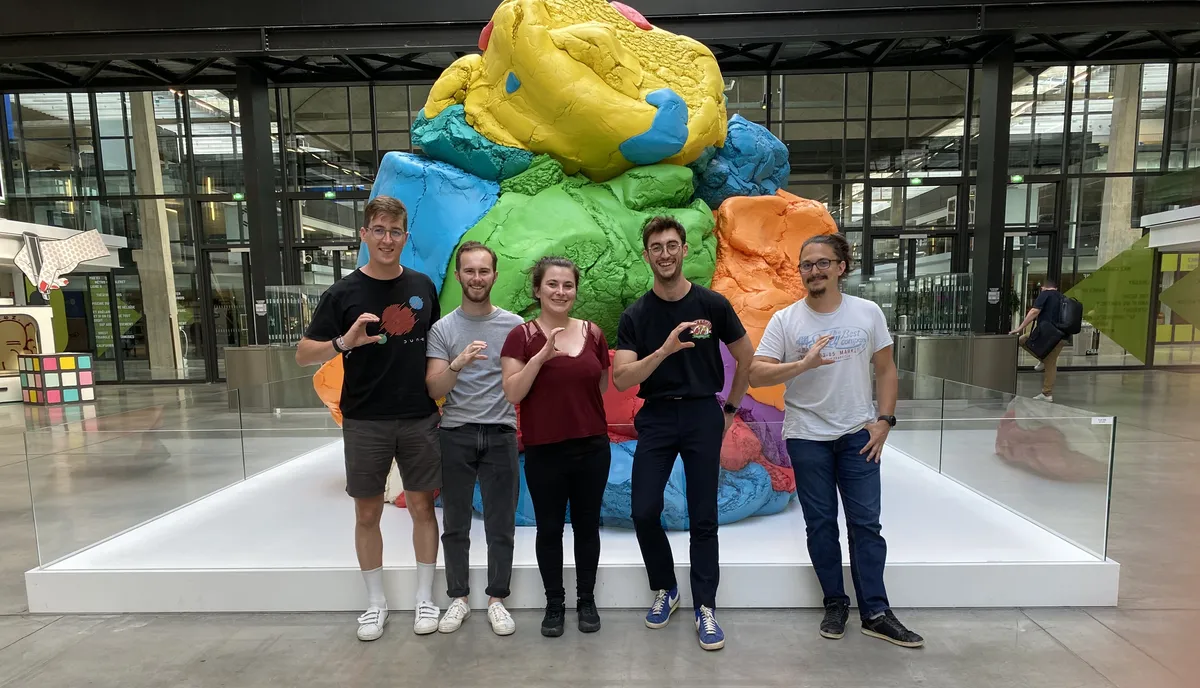 Year 1.5 - Team picture with our first full-time employee!
Even though this experience was short-lived, we still managed to mess up a lot through it.
- We met her only once or twice before hiring her - trusting our CTO's judgment only,
- We gave her no proper onboarding,
- We took summer days off while she was still new…
A recipe for disaster.
When we returned from our break, it was clear that her work did not meet our expectations. Regrettably, we had to end her trial period.
It's a shame because she is a talented dev and we got along well, but we rushed things.
LESSON #16: A small team is better than the wrong team.
We should have learned to be extra careful when hiring. Employees are both the main cost and the most crucial resource in an early-stage start-up. They can either propel your growth or hold you back. We made the mistake of treating this too lightly twice more in a few months (as you shall discover). I hope I won't make it again now :)
Gaining traction & visibility
From a commercial perspective, we were still growing. We experimented with different Go-To-Market (GTM) channels: LinkedIn Ads, SEO, press relations, and a lot of outbound (email, DMs, calls)...
But the growth was too slow for us.
So we rushed things (again).
Each GTM attempt could have worked if we had taken the experiments more seriously and gone deeper. And on the other hand, we did not double down on what was working, like referrals and partnerships.
In other words, we were throwing spaghetti on the wall without waiting for it to stick.
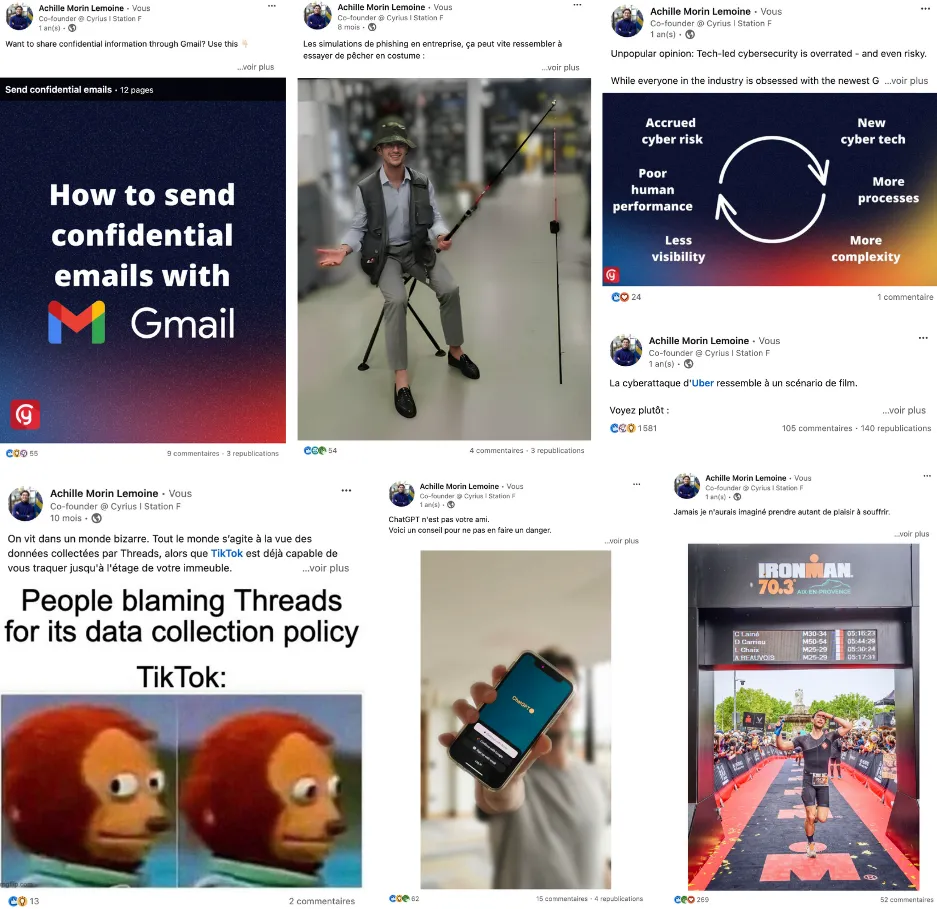
One thing I actually stuck to was LinkedIn posts. From educational to entertaining posts to personal stories, I experimented a lot.
One even went viral (1500k+ likes, 250k impressions), but on over... +100 posts.
I generated +500,000 views with my content in 2/3 years, which helped us cement our legitimacy. It is hard to estimate the business impact though.
We still found enough customers to prove traction.
Notably, we managed to get an intro to the security officer of a trendy scale-up with about 400 employees, Malt.
We got along well, and after a trial period where they compared different tools, they picked us.
It was amazing to stand out in the competition! We felt like we could hold against them.
We had reached €20,000 MRR, which indicated that we had a sustainable business model and enough traction to continue growing.
We had passed three important commercial milestones:
- Enough clients
- Good revenue
- Cool names to display
On top of that, we also had good vanity metrics to show off:
- Selected among the "Top 100 French startups where to invest" by a top business magazine
- Part of the Cybersecurity Startup Radar by Wavestone (a leading cyber consultancy)
- Picked among 1000+ companies in the 40 most promising startups of Station F
- Featured in the trendiest startup magazine in France, Maddyness
- Joined 50 Partners, a well-known start-up accelerator in Paris
- Part of the Cyber Ecosystem from the French Cybersecurity Federation
- Featured twice on TV: on BFM TV (the most famous business channel in France), and an older one in a more obscure channel.
- and so on…
Although deep down you know that none of that impacts your probability of success, you cannot help but feel good when your friends look up at you with pride.
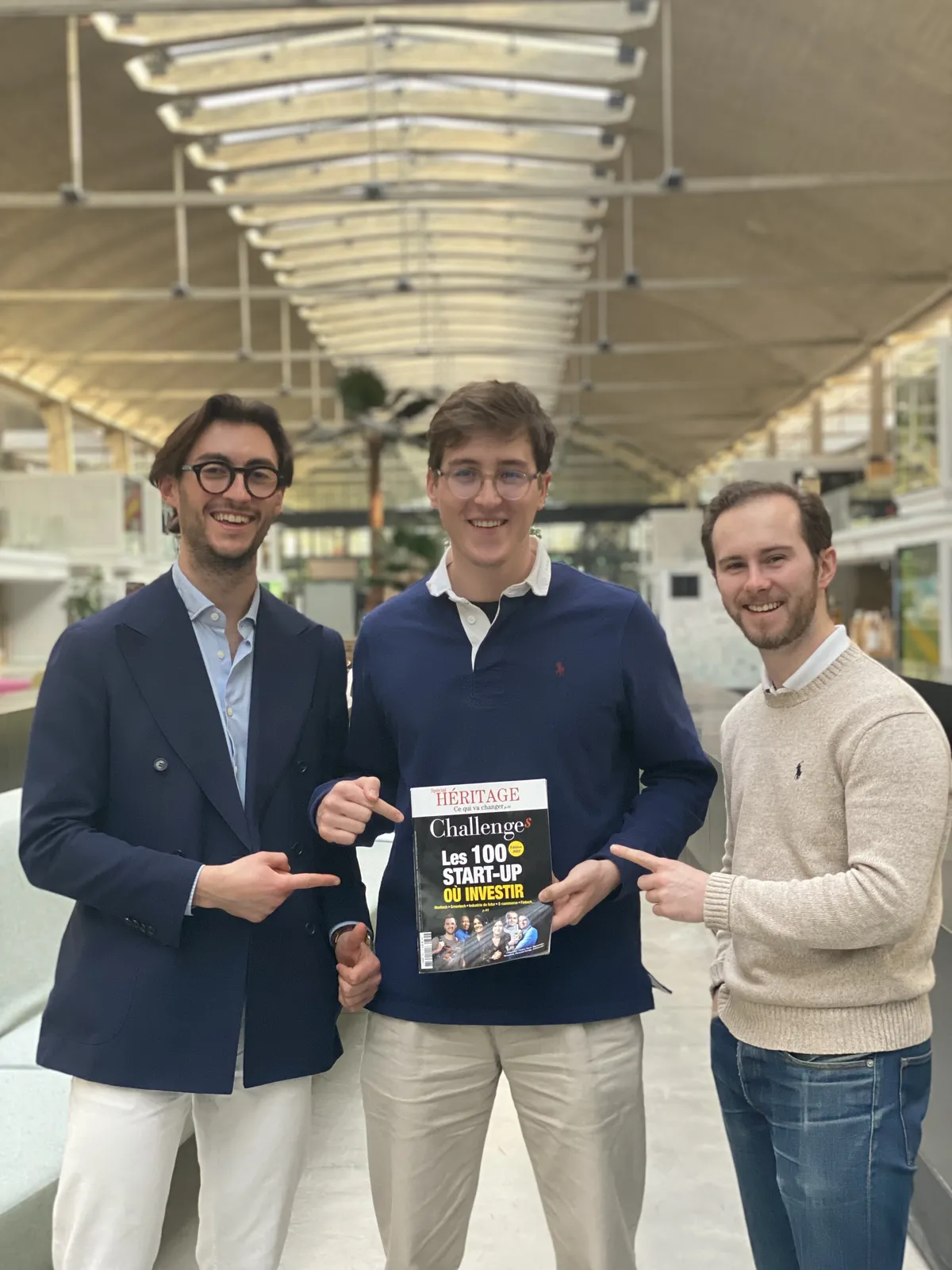 Year 1.5 - Proud to be selected amongst the "100 French startups where to invest"!
LESSON #17: Don't fool yourself by the circus you run.
Obvious but worth repeating: don't fall for the sirens of vanity metrics. What matters is your revenue & growth, startup contests and rewards are just a circus. You can love the show and find it fun, but keep in mind that it is just that: a show.
Our first salary
One of our biggest milestones that are not vanity metrics happened 18 months into the beginning of our journey: we finally got a salary out of the company.
After school, I had survived with a modest - but vital - allowance that I had negotiated with my parents.
I had insisted on presenting them a one-year business plan while we were starting Cyrius when my friends started to take full-time jobs. I asked them to trust me and they did, which allowed me to focus on growing the company.
One year later exactly, I was thrilled with joy and pride to announce to them that I would be able to respect our contract and stop benefiting from their help.
Our first salary was modest: 700€ / month for a few months, then 1,500€ for the two following years.
Modest, but from our labor alone. It was worth its weight in gold.
The funding roadshow hell
We were a team of 4, each with his area of expertise - and above all, we had a CTO.
Time to raise funds!
Why, you may ask?
The competition was getting tougher, and we needed more resources to stay in the race. Above all, more developers: as our competitors had more of them, we should also invest in that.
Or maybe not. The lesson would be coming a year and a half later, stick around.
LESSON #18: Raising funds is not a mandatory step.
That was before the tech bubble popped. Raising funds was still considered the main way to grow a start-up, especially in our social circles. It sounds more obvious now, but we could also have focused on slower, more sustainable growth. Truth is, we were afraid of the competition.
I started talking to investment funds in the second quarter of 2022. Everyone around had told me two things:
- once you start fundraising, you won't have time to do anything else;
- it takes 9 months to raise a financing round.
As I heard one day, "Intelligence is learning from your mistakes, wisdom is learning from other's mistakes".
I guess I am not that wise.
I started half-time while still handling the business side, hoping we would close a round before summer.
It took me a couple of weeks to realize that I could not manage both sales and investor calls full-time - when I basically ran off exhaustion.
Meeting with investors is fun and intellectually stimulating. You engage with sharp minds who challenge your assumptions and gauge your potential to build the next big thing. As a founder, your job is to show them you have what it takes.
That is why founder/investor dynamics are so strange: founders have every incentive to amplify their successes and praise the investor.
Consequently, investors think their analyses are correct and their advice sound, validated by the 5–10% of portfolio companies that deliver outsized returns - the ones they keep looking after.
I am not spitting on the industry, I am part of that system too. I can only relate how I found myself over-analyzing our market and opportunities to propose a unique value proposition.
It is crucial to be different, build your moat, and invest in your uniqueness. But don't do so just to get a "yes" from people who don't run companies themselves - especially not yours.
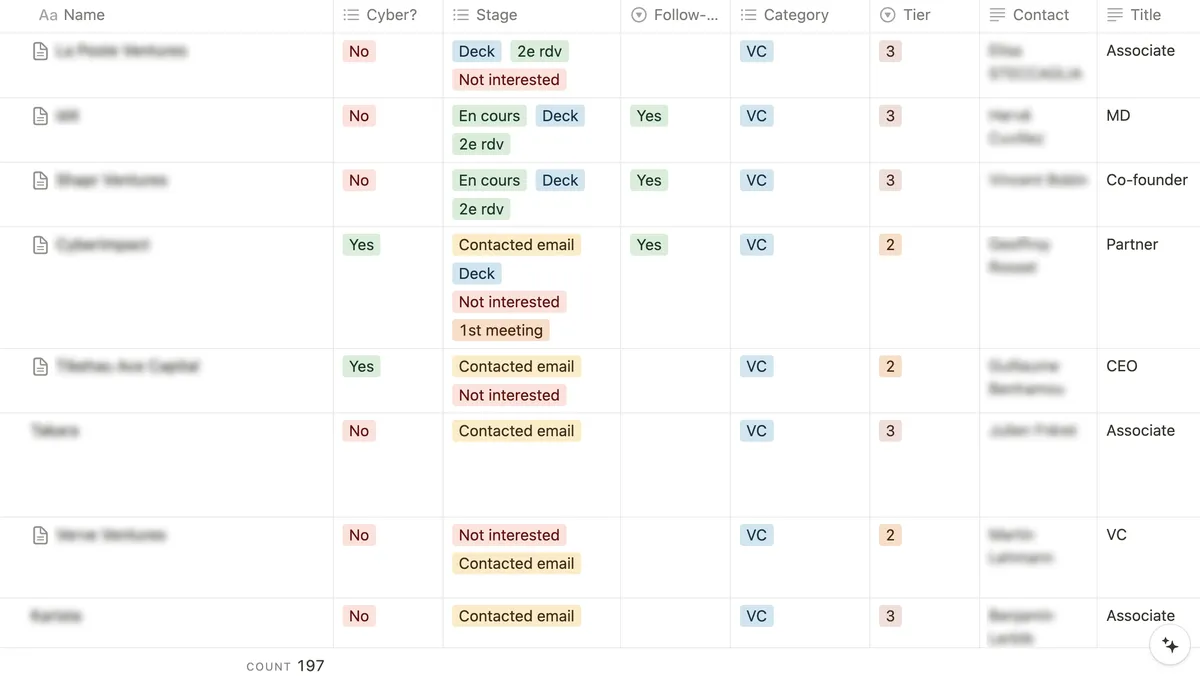 Year 2 - A screenshot of my investor CRM. Almost 200 entries!
I've met people from all over the range, from international VC funds to individual investors offering €3k. As much as pitching your startup is exciting, it is also hard and discouraging to hear "No" all the time.
We had to take two major steps mid-fundraising in order to come to a close:
- Cut our valuation by half after we realized it was too much for the first-timers we were.
- Evolve our vision because the first one was not resonating as expected.
An updated vision
We had experienced firsthand how difficult it was to engage employees in cybersecurity.
Notifications often interrupt other tasks, leading to systematic postponing of the training. (The other primary reason is that security bores/scares everyone to death.)
After meeting with smart security experts, we started forging a new vision of what next-gen training should look like.
What if you could be nudged towards proper behavior precisely when you were about to make a mistake?
What if you could be notified according to your actions only, like when you are creating the same password as last time, or leaking your credentials to a fake landing page?
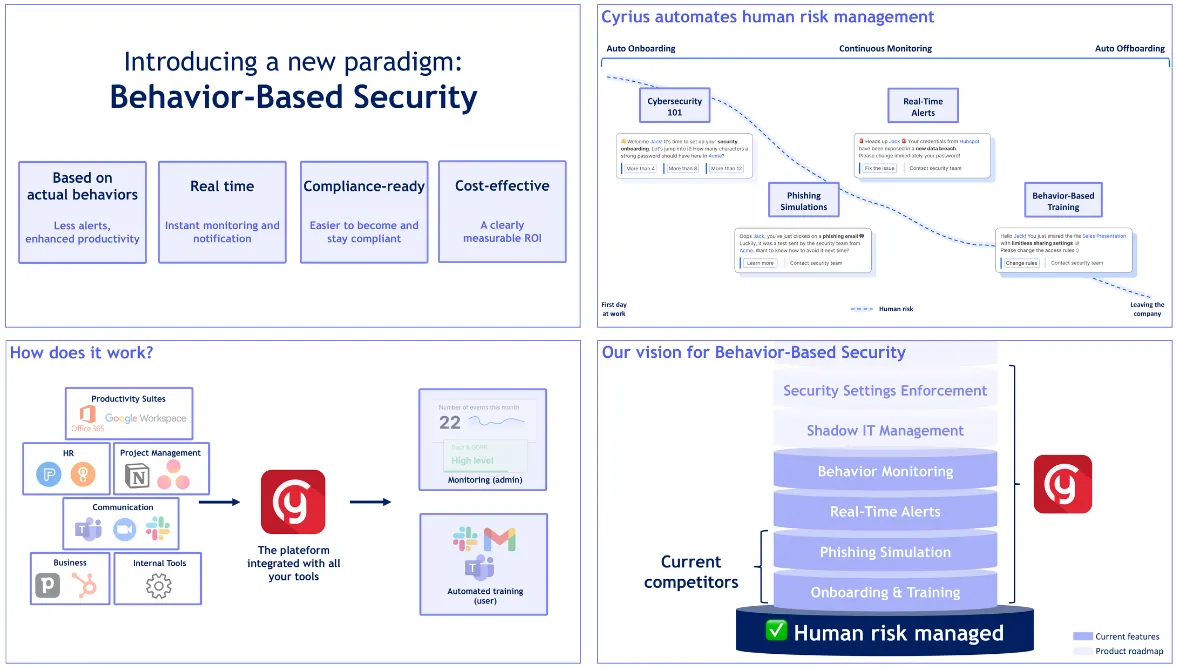 Year 2 - A few slides from our pitch deck
We were excited by this idea, which we called Behavior-Based Security.
Since we would not invest in the best cybersecurity content (because we thought people would not care) nor the best phishing simulation technology (because competitors were already ahead of us), it sounded like a fair differentiation.
We firmly believed in Behavior-Based Security - we even wrote a manifesto and a whole white-paper about it. And it was the idea which eventually led us to raise our first round.
(We eventually discovered that our vision was simply wrong, but only 1.5 years later. Stick around until then.)
LESSON #19: Be strategic and patient when raising funds.
I learned the VC game the hard way. Here are some takeaways from my rookie experience:
- Start humble. Engage with progressively more prominent investors so that you can refine your pitch and posture: first Business Angels, then small funds, and finally tier 1 VC. Don't waste your chances from the start.
- Don't be greedy. Raise as much as you can with minimal dilution, but remember, higher valuations make it harder to raise funds and meet expectations for the next rounds.
- Build momentum. Securing investment from one reputable investor can create a domino effect, making it easier to attract others. Focus on winning over a key investor to build credibility and momentum in your fundraising efforts.
- Acknowledge that it will take time. Fundraising is a full-time job that can last for months. You cannot focus on sales simultaneously, yet you need to show that things are still happening while you're pitching. Craft a strategy or you will eventually run out of good news to share.
Overall, it took me 9 months to meet with 100+ investors.
We secured almost half a million euros in equity, from Business Angels and an investment fund. That amount was completed by debt financing from the BPI (the French public investment bank).
We finished the year with €700,000+ in cash or soon-to-be cash - finally enough to fuel our ambitions.
Now we could play the big game, and gather a team of talented people to reach the moon. From creating a cohesive remote culture and managing the relentless demands of product development, we still had a lot to go through.
The adventure continues in Chapter IV!